The World Food Prize Foundation, founded by Iowan Norman Borlaug, is celebrating 40 years of honoring people whose work has “transformed the quality, quantity and availability” of food around the world.
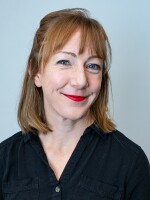
This year’s recipient of the $500,000 award is Dutch scientist and humanitarian Huub Lelieveld. Called the “architect of global food safety standards” by the foundation, he led cross-border efforts to modernize regulations and reduce barriers to delivering emergency aid.
Lelieveld will receive the World Food Prize Thursday night as part of the annual Borlaug Dialogue in Des Moines. The three-day event has drawn in scientists, philanthropists, farmers, heads of state and Hollywood actors – including one who played the ukulele.
During an interview on IPR’s River to River, Lelieveld described several formative experiences as a child in the wake of WWII.
“There was hardly any food at those days,” Lelieveld said. “We were happy that the Swedish actually dropped food over the Netherlands after the end of the war.”
Lelieveld also had first-hand experience with food safety as a young boy, washing small bottles filled with chili sauce for his father’s company. Later, with a degree in engineering and strong interest in microbiology, Lelieveld joined Unilever, a multinational consumer packaged goods company.
“My boss sent me to factories, and when I looked at those factories, I thought, ‘This is absurd,’” Lelieveld said. “[The microbiologists] measured the concentrations of microorganisms, but they didn't think about the source of the microorganisms.”
Lelieveld redesigned processing equipment in the factories to reduce contamination, along with the need for frequent sterilization and chemical preservatives. The foundation said he also developed automated hygienic production methods and advanced techniques for testing food products.

After four decades working for Unilever, he founded the Global Harmonization Initiative in 2004. The organization connects more than 1,600 volunteer experts from over 100 countries to recommend food safety laws and regulations. Some review anonymous reports of food safety threats through the initiative’s international alert and whistleblowing network.
“We have a team that decides whether [it is] serious or not, because it can also be fake reports, of course,” Lelieveld said. “When we have concluded within 48 hours or so that it is serious, then [Global Harmonization Initiative] contacts the local authorities.”
Lelieveld said the $500,000 award that comes with the World Food Prize will go toward Global Harmonization Initiative projects.
Beyond the prize
Several high-profile speakers participated in the Borlaug Dialogue ahead of the award ceremony, including education activist and Nobel Peace Prize Laureate Malala Yousafzai and actor Martin Sheen.
Actor, humorist, author and woodworker, Nick Offerman, participated in a panel focused on regenerative agriculture.
Offerman has produced two documentaries about regenerative agriculture and said he is preparing to narrate a fourth audiobook by Kentucky farmer Wendell Berry who passed away in August at the age of 92.
Offerman said Berry’s writings, which advocate for small family farms and the environment, were an epiphany in his mid-20s.
“From him, I was led to Michael Pollan and Aldo Leopold and Barbara Kingsolver and Robin Wall Kimmerer and James Rebanks, to the writers that say, ‘Hey, we're going way too fast in the direction of technology when people have known how to tend the soil and be stewards to a farm this whole time,’” Offerman said. “When did we stop listening to them?”
Offerman was joined on stage by Berry’s daughter, Mary Berry, who farmed full-time until founding The Berry Center in 2011 to put her father’s “writings to work,” and James Rebanks, a farmer and author from the United Kingdom.

Berry said it was meaningful to be invited to the event in Des Moines.
“My father, when he wrote The Unsettling of America, thought that he was joining in a conversation about the industrialization of agriculture,” Berry said. “He was hoping to be invited into this conversation. Until the day he died, he actually never was invited in.”
The three panelists criticized agricultural systems they said prioritize yields and short-term profits over the environment and rural communities.
Rebanks described how he has used certain practices, like rotational grazing with sheep and cattle, to restore soil and native habitats on his farm over last two decades.
“We know now, technically, how to mend soils. We know how to mend ecosystems. We know how to create a natural abundance more than we ever have,” Rebanks said, adding that he could replicate his results on the “worst square mile of land in Iowa.”
The moderator asked Rebanks if that approach can be profitable. Rebanks countered by asking, “Can it be sustainable and profitable to continue to destroy that same square mile of land?”
The panelists called for a new agrarian vision in the U.S. and U.K., one that supports more small family farms who feed their local communities.
Offerman said society has forgotten to care who grows the food and makes the furniture.
“If you don't know where your stuff is coming from … somebody is cutting corners,” Offerman said. “Somebody's making it less healthy for profit, and that's the trap that we're deep in.”
New technology is not the solution, he said.
“The way that you maintain the health of soil or a community is by human care, by affection and attention, which is more people and less auto-driving combines,” Offerman said.
Offerman closed the panel discussion by playing a ukulele he made and singing stinging lyrics about pesticides and corporate greed, before ending with: “What we need is another hand; the answer lies in more farmers on the land.”