

Our nation is 250 years old — but 250 years ago, Iowa was a world apart. On this episode, an ecologist takes us back to a yesteryear’s landscape of endless tallgrass prairie, bison, elk and whooping cranes, and explains why Iowa is now the most ecologically altered state in the nation. A historian discusses the Indigenous nations living here in 1776 and why the American Revolution mattered enormously to people who may not have even known it was happening. And the tribal historic preservation officer of the Meskwaki Nation joins the program to discuss on her people's presence in Iowa. (This episode was originally produced June 18, 2026.)


-
 There are many Indigenous people in this country working on food sovereignty. The best known member of this movement is Chef Sean Sherman, founder and CEO of The Sioux Chef, which specializes in pre-colonization cuisine. Host Charity Nebbe talks with Sherman about his latest co-authored book, 'Turtle Island: Foods and Traditions of the Indigenous Peoples of North America,' and he will be speaking at the inaugural Iowa Culinary Conference on June 22 in Coralville. Also, the 50th Loess Hills Prairie Seminar takes place May 29-31, hosted by Monona County Conservation. This free event started in 1977 as a modest, back to nature event for local educators, and has now expanded to include dozens of activities for conservationists, families and beyond.
 -
 We can't save the whole world on our own, but we can save our own backyard. 'National Geographic' photographer Joel Sartore has spent his career championing biodiversity and promoting conservation. His Photo Ark project aims to photograph every species living in captivity. So far, he has photographed nearly 18,000 of them. But Joel said he feels just as good about planting prairie in his yard as he feels about his work with 'National Geographic.' In this bonus episode, he shares how everyone can join the conservation team.
 -
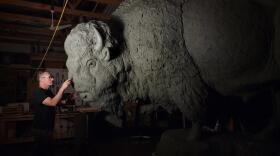 Larger-than-life bison sculptures made of bronze will make a stop at the University of Iowa Museum of Natural History on March 15 as the exhibit heads to Washington, D.C. It's one of several ways Iowa is participating in the 250th anniversary celebration of the U.S.


-
Prairie experts Jim Pease and Mark Muller talk about what we can learn from the prairie and the wildlife that live in it.
-
 Since 2000, a small team at the Iowa Department of Natural Resources has been collecting, cleaning and distributing seeds to reconstruct prairies across the state. One of their longest running partners to help fill orders is Iowa’s Department of Corrections.
 -
The Mann family in Marshall County has created a lasting legacy by transitioning the family farm to public land, restoring it to its native wetland ecosystem.

-
 While corn and soybeans dominate the Midwestern landscape today, some farmers are integrating strips of native prairie back into their fields. This conservation practice has expanded to more than a dozen states.
 -
Justin Roberts didn't set out to be a children's musician, but his tunes and inventive lyrics brought him success and national attention.
-
Less than 0.1% of Iowa's tallgrass prairie remains today, which once covered 85% of the state's land prior to European-American settlement.

