

Companies are voluntarily phasing out the use of so called 'forever chemicals,' or PFAS, used in food packaging. On this episode, experts discuss what the phase out will look like and what consumers need to know. Host Ben Kieffer is joined by Lydia Jahl from the Green Science Policy Institute in Berkley. Later in the hour, Mark Early, Keith Vorst, and Katie Updegraff of the Polymer and Food Protection Consortium at Iowa State University also join the program. (This episode was originally produced Aug. 5, 2024.)


-
 A fire at Postville's Agri Star meat plant has left hundreds of workers in limbo. On this episode, we talk with 'The Gazette's' Fern Alling about the community's response, and the plant's complicated history. We also hear how camping bans are pushing unhoused Iowans further from the resources they need with the Midwest Newsroom's Nicole Grundmeier. William Morris of the 'Des Moines Register' shares how a retired Iowa State professor wins some $2 million in a landmark equal pay case, and we talk with Vanessa Miller, higher education reporter at 'The Gazette' about new oversight questions at the UI Center for Intellectual Freedom. Then, we hear from IPR's Gavin McGough and Jake DeGroat of the Iowa Climbers Coalition about Iowa's new rock-climbing destination. And IPR Studio One Host Sean McClain grooves us into the weekend.
 -
 Row crop farmers in Iowa are facing a third consecutive year with costs generally exceeding prices, according to a new report. While lenders are seeing more signs of financial stress, researchers say the conditions are not the same as the 1980s farm crisis.
 -
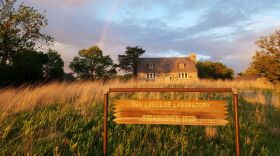 Construction is underway on a new Innovation and Discovery Lab at Iowa Lakeside Laboratory that will expand hands-on learning for students of all ages. The new space will also support research to better understand and protect the water quality of the Iowa Great Lakes.


-
Ten days, a quarter-million miles from Earth and for the first time since 1972, humans flew around the moon. On this archive episode, we hear from three Iowans who were involved in the historic Artemis II mission that was completed on April 11. Madison Tuttle of West Des Moines, Jack Sieleman of Waukee and Alex Brewer of Council Bluffs share about their love of space exploration — whether lifelong or found on the job — and what their roles were in the preparation for and execution of Artemis II. (This show was originally produced April 2026).
-
 With the return of New World screwworm in the U.S., animal health experts say Iowans should carefully monitor livestock and pets and report suspicious signs. The larvae of the adult fly eat the living flesh of warm-blooded animals.
 -
Women are more vulnerable to strokes, yet they're historically underreported and underdiagnosed. On this episode, the science of menopause and the aging brain. First, University of Iowa neurologist Dr. Hannah Roeder shares how stroke risk in women nearly doubles in the decade after menopause, and the gender disparities of stroke cases, response, and recovery. Then, we learn about a new study to examine whether the menopause transition quietly accelerates brain and blood vessel aging. Finally, University of Iowa Comprehensive Stroke Center Head Dr. Enrique Leira joins to share how the Code Stroke system has improved recognition and response to strokes for the past 20 years across the state.

-
On this episode we hear from three Iowans who were involved in the historic Artemis II mission that was completed on April 11. Madison Tuttle of West Des Moines, Jack Sieleman of Waukee, and Alex Brewer of Council Bluffs are all relatively early in their careers, but they've spent all that time working at either the Kennedy or Johnson space centers. They each share about their love of space exploration — whether lifelong or found on the job — and what their roles were in the preparation and execution of Artemis II.
-
 Iowa native Brooks Wheelan realized a passion for comedy while attending the University of Iowa, but continued his studies, seeing biomedical engineering as a way to Los Angeles or New York. His plan worked, and he went on to be a cast member on Saturday Night Live, and the 'New York Times' called his comedy special 'Alive in Alaska' one of the best of 2024. Wheelan joins Charity Nebbe during a stop in Iowa City to talk about his career and what's next. Then, Lynetter Pohlman has led Iowa State University Museums for 46 years and has been there since its inception over 55 years ago. Ahead of her retirement, Pohlman joins the show to take a look back.
 -
When you encounter an insect in a surprising place it can be alarming, particularly if you’re one of the many people who has an uncomfortable relationship with insects. Entomologist Zach Schumm of Iowa State University joins this Horticulture Day to give us the tools we need to decide if an insect is a pest or something we should leave in peace. Extension horticulture specialist Aaron Steil also joins to answer listeners' horticulture questions.

