

Maura Curran
/
Iowa Public Radio
The S.A.F.E. Center of Iowa is meant to be a one-stop shop for victims as they begin the healing process. It offers forensic exams, along with STD treatment, medications and after care, including follow up appointments and counseling.

Chris Machian
/
KFF Health News

Natalie Krebs
/
Iowa Public Radio
-
 Dementia can feel like something every family faces alone — but it doesn't have to be that way. On this episode, we talk with Shelby Roberts of the Alzheimer's Association, Dr. Yogesh Shah of Broadlawns Memory Clinic and Iowa's state medical director, Dr. Robert Kruse, about brain health and innovative approaches to early identification, prevention and care for Iowans living with dementia. Then, a conversation with 3rd Congressional District candidate, State Sen. Sarah Trone Garriott, D-Des Moines.
-
Are America’s divides truly political — or is something else at work? In his book 'Nations Apart: How Clashing Regional Cultures Shattered America,' historian and New York Times bestselling author Colin Woodard argues that today’s polarization can’t be explained by Democrat/Republican or urban/rural divides. Instead, he traces these conflicts back to regional worldviews rooted in the nation’s earliest settlement patterns. (This show was originally produced Nov. 25, 2025.)
-
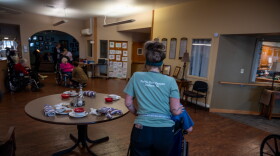 An audit released Monday shows the state has made “substantial improvements” in efforts to inspect nursing homes and now meets federal requirements.


-
On this episode, we learn about Harvest Academy, a recovery program in Indianola that's building a new campus in Des Moines. We meet Derek Johnson, the program's COO who landed in this line of work after his own years-long struggle with addiction. We also talk with Troy Roberts, a graduate of the program who now goes into Polk County Jail to recruit future students. Then, we talk with Iowa State University professor Raquel Espin Palazon, whose white blood cell research could lead to new cancer treatments.
-
 Iowa has the second-highest cancer rate in the nation and young people — ages 15-49 — are not being spared. The six leading corn-producing states have a cancer rate for young adults that is about 5% higher than the rest of the nation. Host Charity Nebbe speaks with director of the Iowa Cancer Registry Mary Charlton and two young cancer survivors. (This show was originally produced November 24, 2025.)
-
Elizabeth Wehrle of Montezuma went into the hospital in February and this week she gets to go home. In March, she received a first-of-its-kind lifesaving surgery, a quadruple organ transplant. On this episode, we talk with Wehrle and Dr. Ankit Bharat of Northwestern Medicine, the lead surgeon for this groundbreaking procedure. We hear about the health issues that led to these transplants, what this surgical advancement means and what goes into the decision to perform a surgery that hasn’t been done before. Then, we talk with Suzanna de Baca, Iowa author of 'You Were Never Lost: Poems From The Tallgrass Prairie.' De Baca didn’t expect to write about grief, but when back at the place where she spent her childhood with a friend who died, poetry and nature helped her cope.

-
On this episode of Talk of Iowa, we talk with Dan Roche, author of Eyes By Hand: The Prosthetics of Art and Healing, a book on how prosthetic eyes are crafted and how ocularists provide care for those that have experienced eye loss. We hear about his experience losing an eye, how he became interested in researching prosthetic eyes and what he’s learned. We also talk with Lindsay Wagner-Pronk, one of just a few ocularists in Iowa, who is featured in the book. (This show was originally produced August 18, 2025.)
-
More than 100 new Iowa laws just took effect on abortion, crime, and policing. On this episode of River to River, we talk about what’s changed and who it affects. We hear from Erin Murphy of the Gazette who gives us a quick survey of the most significant new laws. Then, IPR's Natalie Krebs explains the new telehealth restrictions and what options remain for abortion pill prescriptions. Mahaska County Attorney Andrew Ritland tells us about Iowa's new mandatory minimum for repeat felons. And state Rep. Ruth Ann Gaines shares her thoughts on a new law that removes the annual police bias training requirement.
-
Dave Good was a District Court Judge living in Cedar Rapids. In 2003, at the age of 56, he was diagnosed with early onset Alzheimer’s. His wife Kathy became his caregiver while continuing to work full time. On this episode, Kathy Good, who now guides other caregivers as the Senior Director of the Chris and Suzy DeWolf Family Innovation Center for Aging and Dementia of Mercy, shares her story. Then Good and Michael Wagler, Iowa State Director for the AARP, will talk about the resources those who care for loved ones with dementia. (This show was originally produced July 24, 2025.)


