

Natalie Krebs
/
Iowa Public Radio
Gov.-elect Rob Sand plans to start unwinding privatized Medicaid on Day One. House Speaker Pat Grassley said Republicans are still setting their legislative priorities.

Madeleine C King
/
Iowa Public Radio

Madeleine King
/
Iowa Public Radio
-
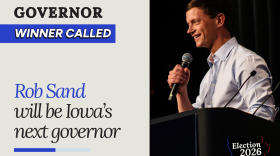 Democrat Rob Sand has defeated Republican Zach Lahn in the Iowa governor's race.
-
 Republican Zach Lahn and Democrat Rob Sand are making their final push for support ahead of Election Day on Nov. 3. This week, Lahn rallied MAHA supporters in Des Moines and Sand held a Get Out the Vote event in Iowa City.
-
 The candidates found common ground on mental healthcare, water quality and government accountability, but offered different approaches to Medicaid, education and state spending.


-
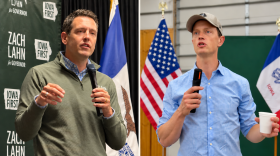 New campaign finance reports show Republican Zach Lahn received more money from national political groups, while Sand spent more as the campaigns’ combined spending topped $46 million.
-
 Iowa officials project modest revenue growth over the next two years, but Democrats warn collections remain more than a billion dollars below current state spending.
-
 Both candidates say they want Iowa students to succeed. But Republican Zach Lahn and Democrat Rob Sand disagree over who should qualify for education savings accounts and how the money should be monitored.


-
 A special session cleared the way for the state to negotiate tax credits to finalize Mesabi Metallics' proposed $15 billion facility, but some lawmakers are concerned about the impact on the state budget.
-
 Iowa will select its new governor in a few weeks. Where do candidates stand on some of the top issues on voters' minds? On this episode, host Ben Kieffer interviews both major-party nominees for governor — Republican Zach Lahn and Democrat Rob Sand. We get their views on the state’s poor water quality, Iowa's climbing cancer rates and education funding among other issues. Lahn and Sand are competing for the seat currently held by Gov. Kim Reynolds.
-
On this episode, we talk with both of Iowa's major political party chairs. First, Iowa Democratic Party chair Rita Hart, then Iowa Republican Party chair Jeff Kaufmann. We discuss the open governor and Senate races and key Congressional and statehouse races in the November 3 midterm election, plus where the 2028 presidential caucuses stand.


