

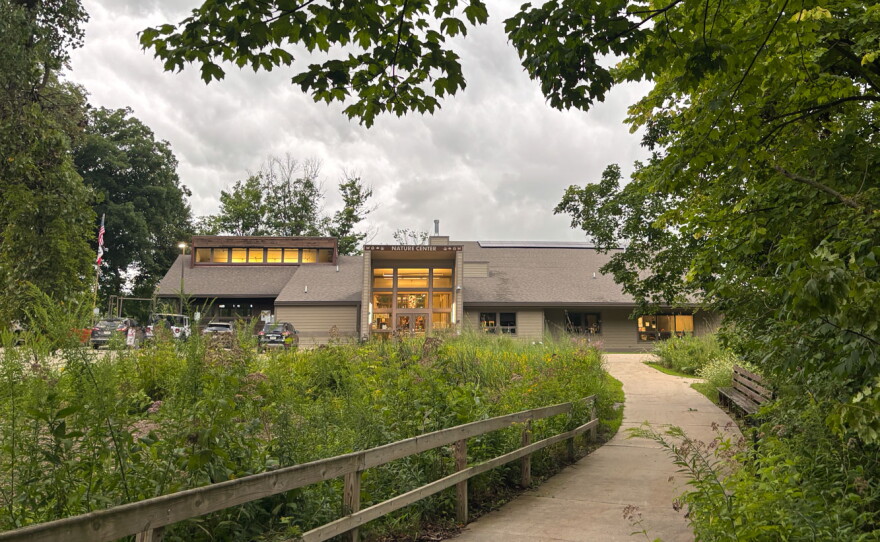
Before Black Hawk County purchased the land for a park in 1976, the Hartman Reserve Nature Center in Cedar Falls was a YMCA camp. Back then, it was crawling with blue-spotted salamanders.
“There were salamanders all over. There used to be a swimming pool at the top of the parking lot, and they would find blue-spotted salamanders by the pool and in the shower houses,” said Nature Center Manager Amy Davison.
But the creatures have disappeared from the reserve. Davison said development pressure and highway construction beginning in the late 1980s likely disrupted their habitat, causing their decline. The disappearance is notable, as the species is endangered in Iowa.
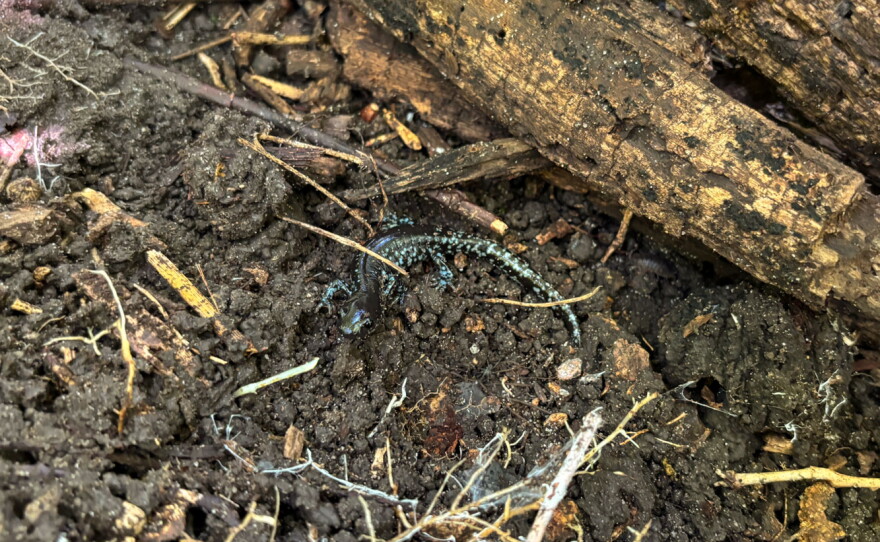
Despite being widespread in many parts of the eastern U.S. and Canada, the salamander persists in only two locations in the state. The populations in Iowa are considered genetically distinct from blue-spotted salamanders elsewhere.
A collaboration between Black Hawk County Conservation, the Iowa Department of Natural Resources and the Omaha Henry Doorly Zoo is working to restore the creatures to their former habitat in the reserve, a 340-acre park extending from forested bluffs to the swampy, tree-lined banks of the Cedar River.

Blue-spotted salamanders can still be found less than a mile away, across the river in George Wyth State Park. The conservation effort involves the study of those salamanders and their preferred habitat to identify similar sites in Hartman Reserve where the species might again thrive.
Similarly, the Henry Doorly Zoo uses data from the study as it seeks to create a habitat for captive blue-spotted salamanders. Three years ago, reserve staff delivered salamander larvae from George Wyth to the zoo, where amphibian conservation experts are working to facilitate breeding and build a population.
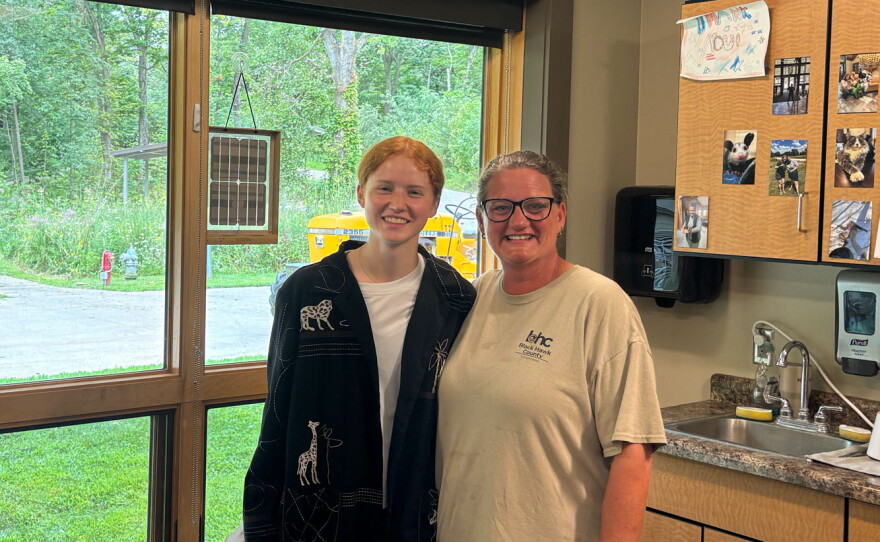
For the past five summers, the reserve’s nonprofit partner organization has funded a college-age intern to lead the effort. Sophie Vandersee, a sophomore at Mount Holyoke College and Cedar Falls resident, was the 2026 intern.
In her time at the reserve, she documented 79 salamanders, noting the size, gender and age of each animal, and recorded additional data on the pH, temperature, soil type and other details of the surrounding environment.
“The whole process is basically just looking in these dark, moist spots where they like to get into,” Vandersee said, of the search process.
She said the salamanders are unpredictable, disappearing and reappearing from locations across George Wyth.
“You don't know for sure, so you have to look everywhere,” she said.
The reserve organizes groups of citizen scientists and local community college students to assist with the data collection, sending them out on surveys. It has documented as many as 200 salamanders in a single summer.
Flooding along the Cedar River complicated the search process this year, postponing the surveys. But a group of 15 volunteers assembled on Aug. 20. They added seven salamanders to the year’s count, bringing the year’s total to 86.

For volunteers, the thrill of finding an endangered species is electric. On the day of the survey, each encounter with a blue-spotted was met with cheers of excitement, followed by a reverent hush while measurements were taken and data was recorded.
“I was coming here expecting to see hopefully at least one, but you know, finding seven … it's been really cool,” said volunteer and Waterloo resident Danny Lockard.
“Some of them have pretty vibrant blue spots on them, all over their back, their sides and their feet, and they just look like a little tiny salamander that lives under logs,” he said.
When Vandersee was not searching for salamanders in George Wyth, she was scoping the swampy woodlands of the Hartman Reserve to identify vernal pools which could host a relocated population.
The species requires a specific habitat, preferring vernal pools, which fill up in the spring and provide consistent moisture while larvae grow through the summer. Pools that remain full year-round, however, attract populations of fish and other species that prey on the salamanders.
“There’s really a goldilocks zone for how big a vernal pool should be,” said Vandersee.
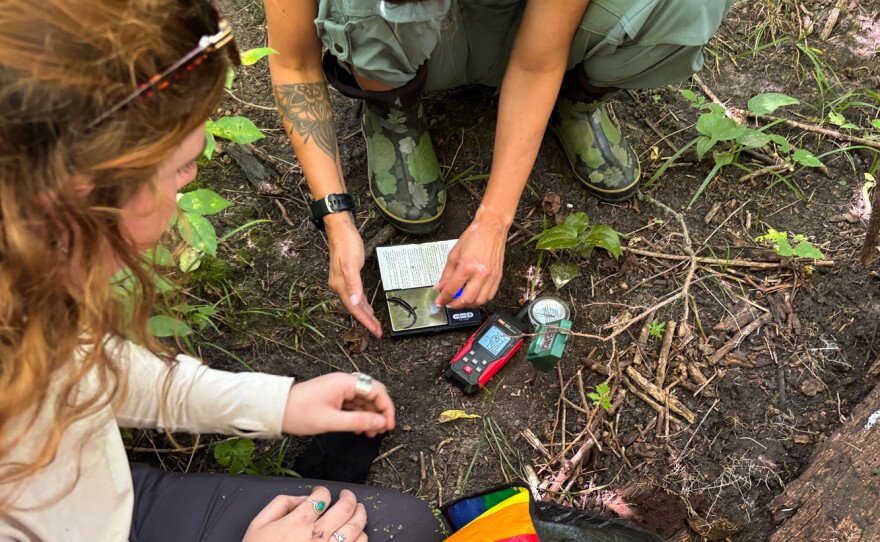
She identified seven places that were good candidates this summer. She then mapped them on GPS and visited them regularly to record data on factors from surrounding soil pH to humidity to predator presence.
Of the seven pools, Vandersee said four were promising based on her observations. Next spring, reserve staff will revisit the locations to observe their seasonal moisture levels. If one of the sites proves promising, it could host a future population of salamanders relocated from George Wyth.
But as reintroducing the species to the Hartman Reserve becomes a real possibility, Davison, the nature center's manager, said it’s not something they take lightly.
“The question becomes: Should we just let them be their little blue-spotted salamander selves, or is it going to work for us to try to have them here?” she said. “We have to make sure that what we're doing is for the right reasons, and not just because we want them here because they're really cool animals.”
Beyond the study, the reserve has invested in creating an environment where the species might again thrive, including erosion mitigation and drainage infrastructure to protect the wooded bluffs, which are tucked into an urban corridor between Cedar Falls and Waterloo.
Davison said the goal is to create a sustainable environment for even the most fragile species, such as the blue-spotted salamander.
“If we can have them here, it gives us a sense that we're doing some things right,” she said.


